
May 19, 2026·7 min read
How Favela Tours Create Real Social Impact in Rio's Communities
Community-led tours funnel money directly into favela economies: local guides, family businesses, arts programs. Here's exactly how the impact works.
When you pay for a favela tour with a community-based operator, the money doesn't disappear into a corporate account in another country. It flows, directly and measurably, into the neighbourhood you're walking through.
That's the promise of community-led tourism. But promises are easy. After 15 years of running tours in Vidigal, Rocinha, and the Dois Irmãos ridge, we can show you exactly where the money goes and why it matters more than most travellers realise.
The Problem with "Poverty Tourism"
Let's name the criticism first, because it's fair.
There's a version of favela tours that is extractive: a bus pulls up, tourists photograph residents through tinted windows, money goes to an operator based in Ipanema or São Paulo, and the community gains nothing. Residents become props. That model exists, and it's worth avoiding.
The Wall Street Journal, CNN, Forbes, The Guardian, and NPR have all covered the difference between voyeuristic and community-centred approaches when reporting on Favela Experience. The distinction comes down to one question: who controls the tour, and where does the revenue go?
What Community-Led Tourism Actually Means
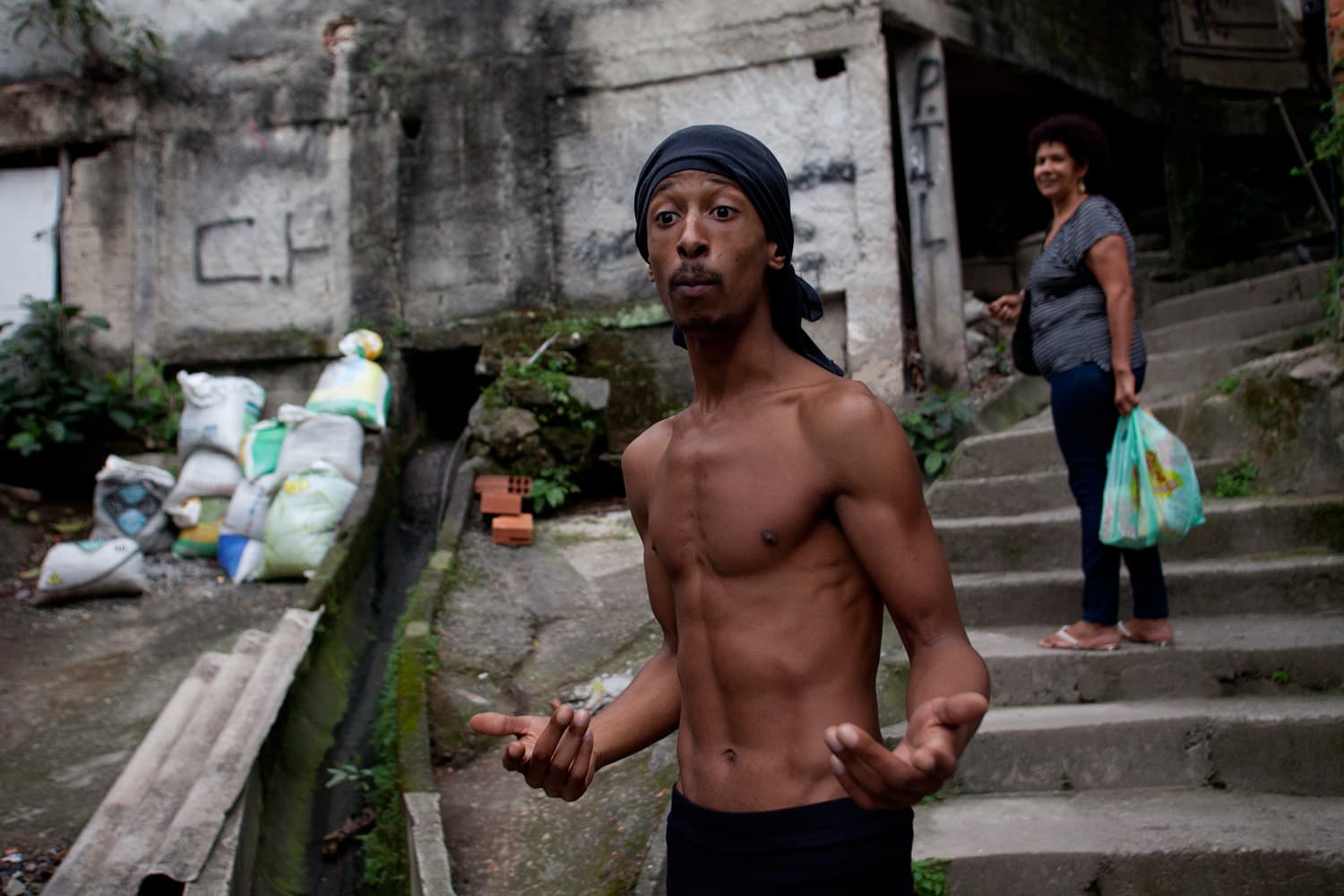
A community-led tour is owned and operated by people who live in or have deep, long-standing ties to the neighbourhood. Guides aren't hired hands reading from a script, they're residents with personal stories, family history in the community, and a stake in how their home is presented to the world.
At Favela Experience, every guide lives in or directly adjacent to the communities we visit. They decide what gets shown, what doesn't, and how. When a conversation goes somewhere unexpected, a debate over a football match, an impromptu visit to a neighbour's art studio, that's not a detour from the tour. That's the tour.
Where Your Money Goes: The Direct Impact Chain
Local Guides: the Largest Share
Guide fees represent the single biggest portion of any tour price. Our guides earn a professional wage, not a tip-based income. That income circulates locally: rent paid to landlords in the community, groceries from corner shops, school fees for kids, contributions to neighbourhood associations.
One employed guide with a stable income supports a household. That household buys from local vendors. Those vendors hire helpers. The multiplier effect of keeping money inside a community is well-documented in development economics, and it's exactly why where you book matters as much as whether you book.
Local Businesses: the Stops That Aren't Optional
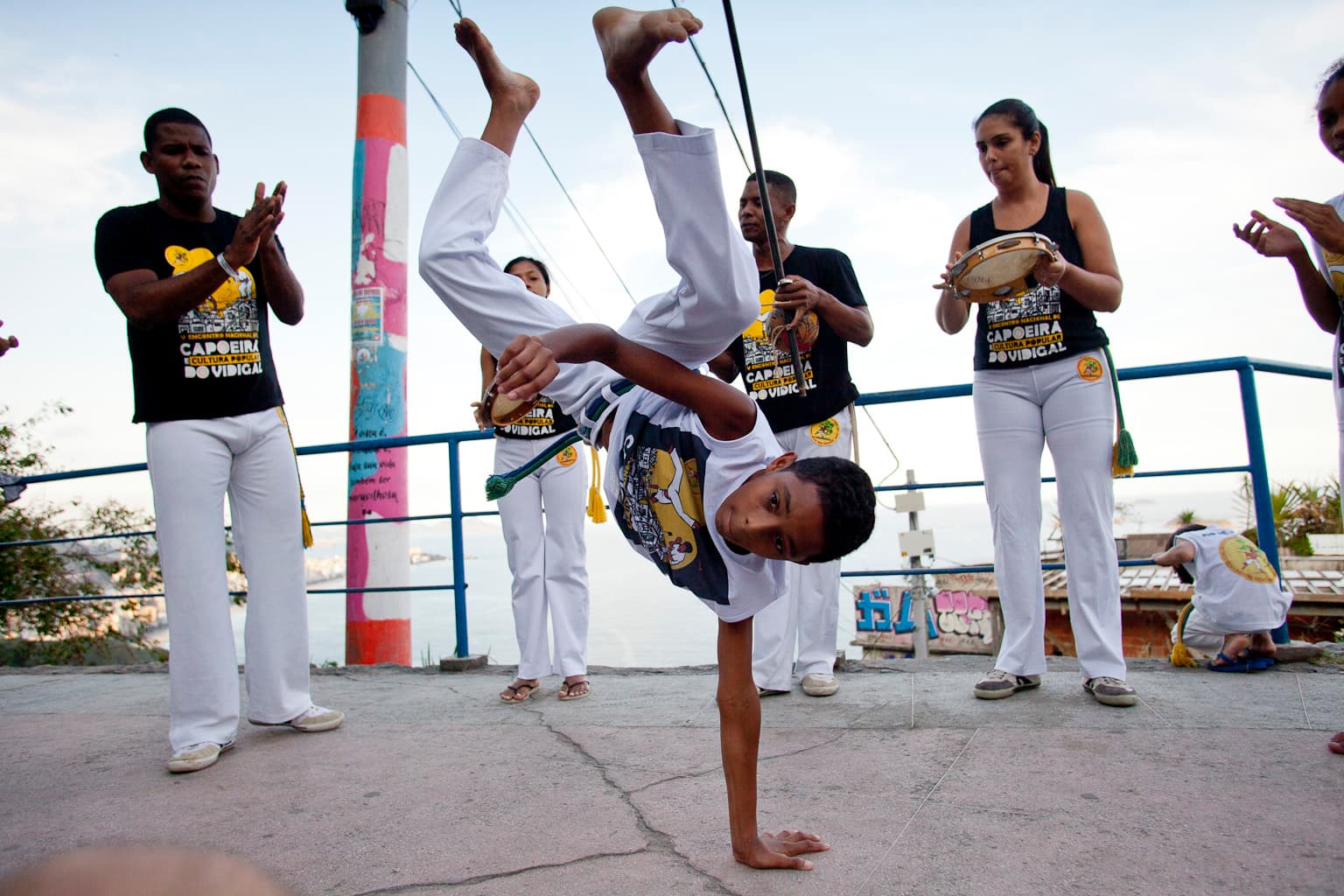
Our tours route through community-owned businesses by design. A capoeira studio. A family-run açaí bar. An artist's workshop in a converted shipping container. A community bakery.
These aren't paid placements. They're relationships built over years. When a group of ten visitors buys from a community vendor, that's often the equivalent of a week's normal foot traffic. The visibility compounds: visitors share photos, tag locations, write reviews. Community businesses gain reach that no advertising budget could buy them.
Arts and Culture Programmes
Favela communities have extraordinarily rich cultural output: funk carioca, forró, samba, graffiti, capoeira, baile charme, visual art. Much of it is underfunded or actively suppressed by authorities who conflate favela culture with criminality.
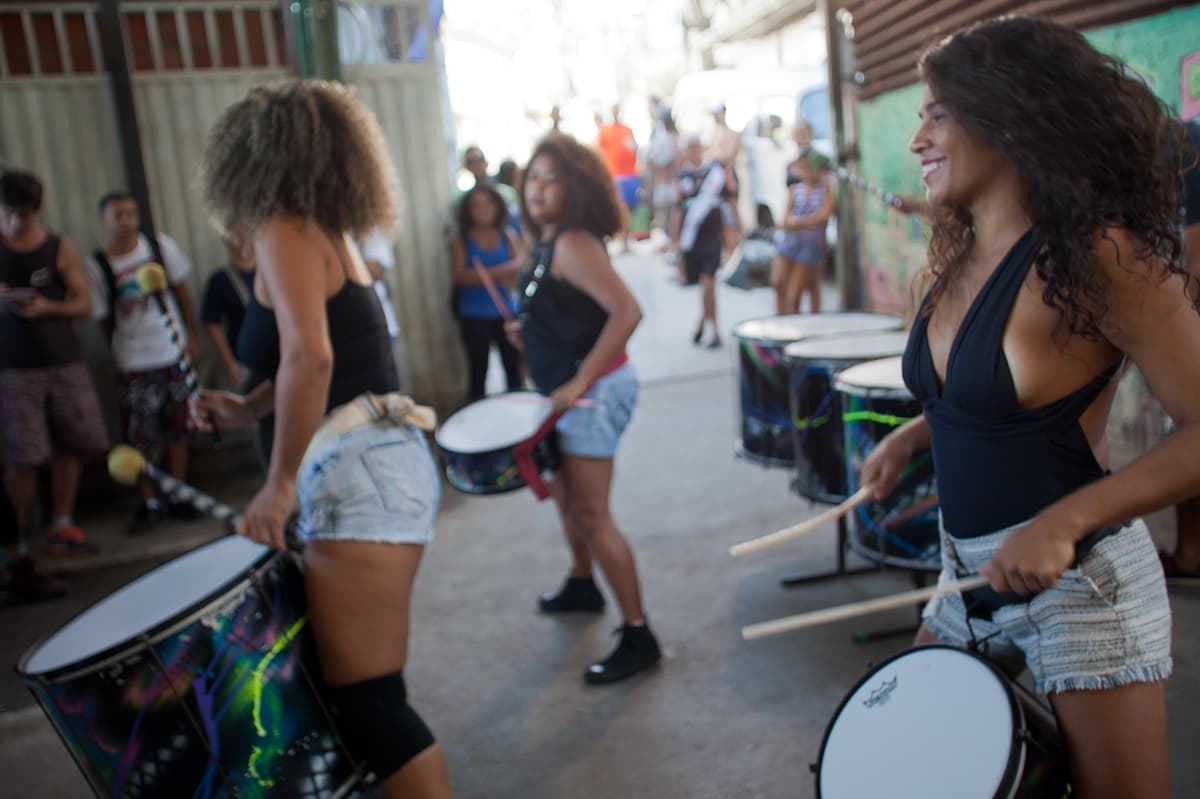
Tour revenue has directly funded dance workshops, instrument repairs, mural restoration, and performance spaces in communities we work with. These aren't donations, they're purchasing power from tourists who come specifically because they want to engage with living culture, not a museum version of it.
The Impact Experience: Structured Social Investment
Our Vidigal Impact Experience (temporarily paused) takes the community investment model furthest. A portion of every ticket goes directly to a neighbourhood education and arts initiative in Vidigal. Participants meet the people running it. They see the classrooms, the kids, the work in progress.
This is regenerative tourism in its most literal sense: the act of visiting funds the conditions that make the community worth visiting. It's a positive loop, not an extractive one.
What the Research Says About Tourism-Led Development
Community-based tourism (CBT) is now a recognised field within development economics. The United Nations World Tourism Organization identifies it as one of the most effective tools for poverty reduction when structured correctly, specifically when:
- Local ownership is genuine, not tokenistic
- Revenue sharing is transparent and verifiable
- Community consent is ongoing, not a one-time agreement
- Cultural representation is controlled by the community, not external operators
Studies in comparable settings, townships in South Africa, barrios in Colombia, kampungs in Indonesia, consistently show that well-run CBT programmes raise household incomes, reduce out-migration, and increase community investment in public infrastructure like parks, schools, and health posts.
Rio's favelas are not an exception to this pattern. They're a proof of it.
The Counter-Argument: Does Tourism Change Communities for the Worse?
Gentrification is a real concern in Vidigal especially. As the community became internationally known, partly through tourism, partly through its geography, partly through the global profile of funk music, property prices rose and some long-term residents were pushed out.
This is worth naming honestly. Tourism is not neutral. Increased visibility can attract real estate speculation. Communities that become "trendy" face displacement pressure.
Our position: the answer is not to stop tourism. It's to structure it so that residents capture the economic benefits before outside capital does. That means prioritising local operators over international OTAs, employing guides at fair wages rather than exploiting gig economics, and reinvesting in community institutions that anchor residents regardless of market pressure.
Tourism that enriches a community builds its resistance to gentrification. Tourism that extracts from it accelerates the very displacement it often claims to lament.
How to Tell the Difference When You're Booking
Not every operator claiming to be "community-based" is. Some indicators worth checking:
Signs of genuine community grounding:
- Guides are residents, not freelancers hired from outside
- The operator has a physical presence in the community (office, association membership, partnerships with local businesses)
- Reviews mention specific guides by name and describe real conversations, not scripted performances
- The operator can explain exactly how revenue is distributed
Red flags:
- Tours described as "poverty tourism" or "slum tours" in their own marketing
- No mention of guide identity or community relationships
- Booking exclusively through large international OTAs with no local contact
- Marketing that emphasises danger, decay, or "authentic poverty" as selling points
Favela Experience has been operating from Vidigal since 2011. Our guides are named, our partnerships are visible, and the businesses we visit are verifiable on Google Maps. We're not hard to investigate.
The Bigger Picture: Why This Matters Now
Rio's favelas are home to roughly 1.5 million people, about a quarter of the city's population. They produce a disproportionate share of its cultural output: music, dance, food, art, sport. They've been systematically underfunded, over-policed, and misrepresented in media for decades.
Tourism is not going to solve structural inequality. That's not the claim. But tourism can redirect spending from wealthy enclaves, Leblon, Ipanema, Barra, into communities that have historically been excluded from Rio's economic life.
Every tour we run is a small redistribution. Multiplied across thousands of visitors a year, across 15 years of operation, it adds up to something real.
Book the Tour That Puts Community First
Our most direct social investment option is the Vidigal Impact Experience: R$300, 5 hours, visits to community businesses and an education project. It's temporarily suspended right now; message us on WhatsApp to hear when it returns.
For a broader introduction, the Vidigal Walking Tour and Rocinha Walking Tour both route through community-owned businesses and are led by resident guides.
Every booking is a vote for a version of Rio tourism that the city and its communities actually benefit from.
What to wear on a favela tour → · Is it safe to visit a favela in Rio? → · Complete favela tour guide →
Favela Experience: community-led tours in Rio de Janeiro since 2011. Featured in The Wall Street Journal, CNN, Forbes, The Guardian, and NPR.
AN
Adam Newman
Co-founder · Favela Experience, operating since 2011